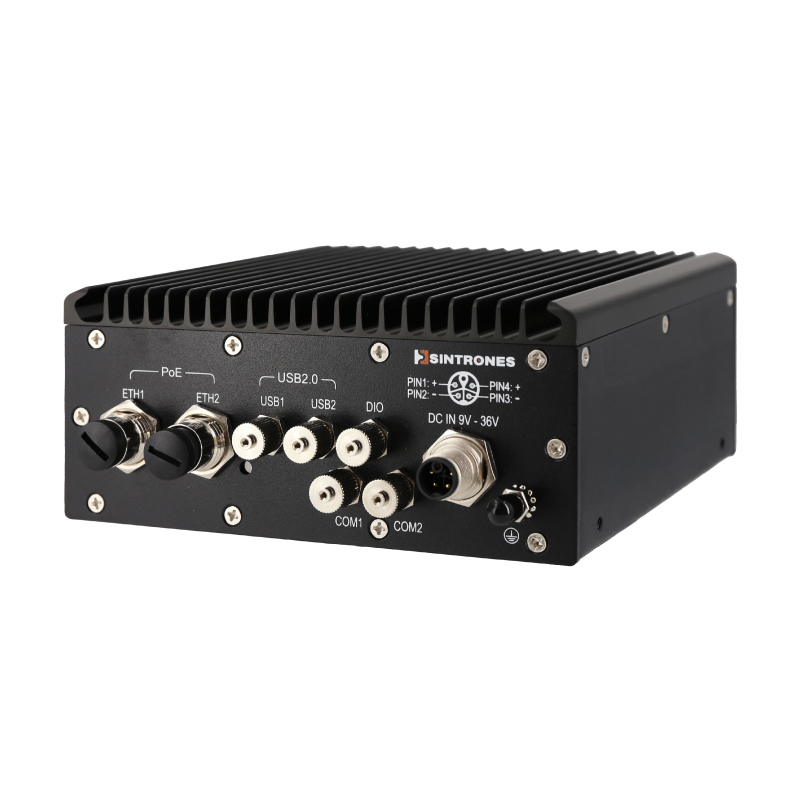
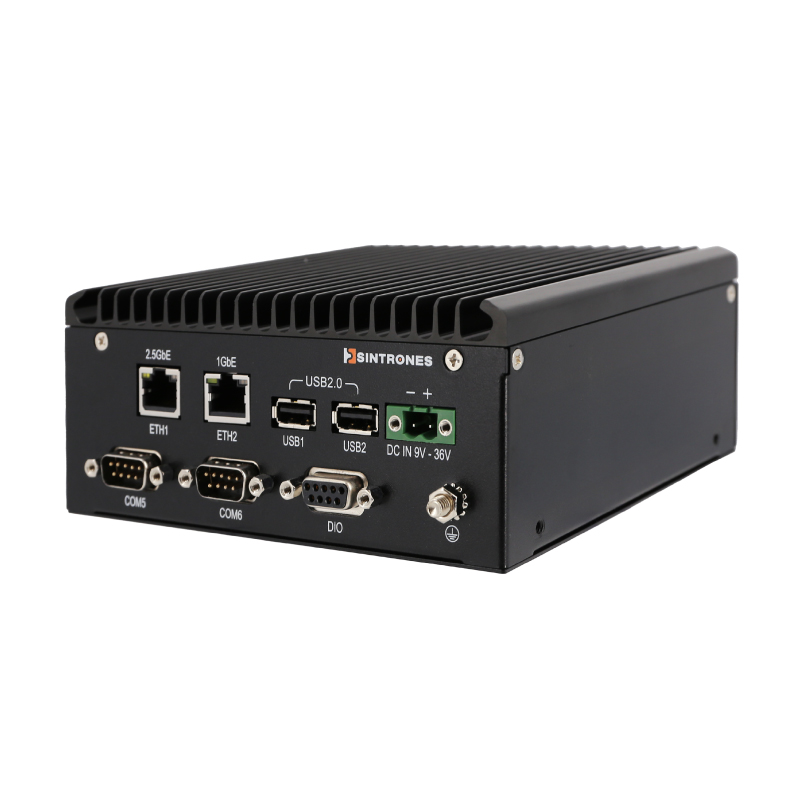
Technical FAQ
Q1: How can users configure the serial ports (COM) across the different SBOX-2625 model variants?
A1: The serial communication behavior depends on the specific hardware SKU selected:
-
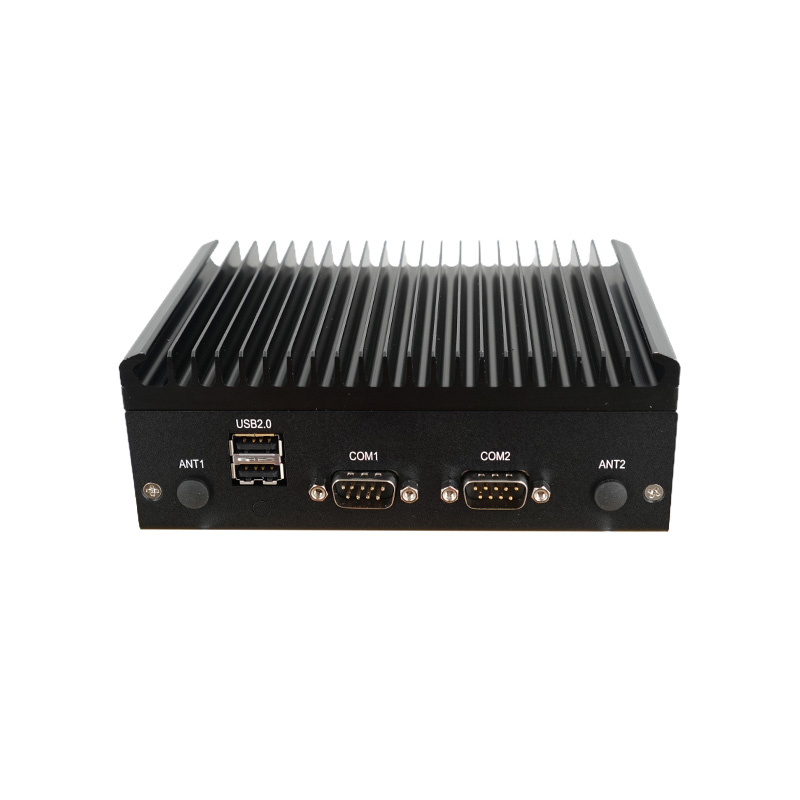
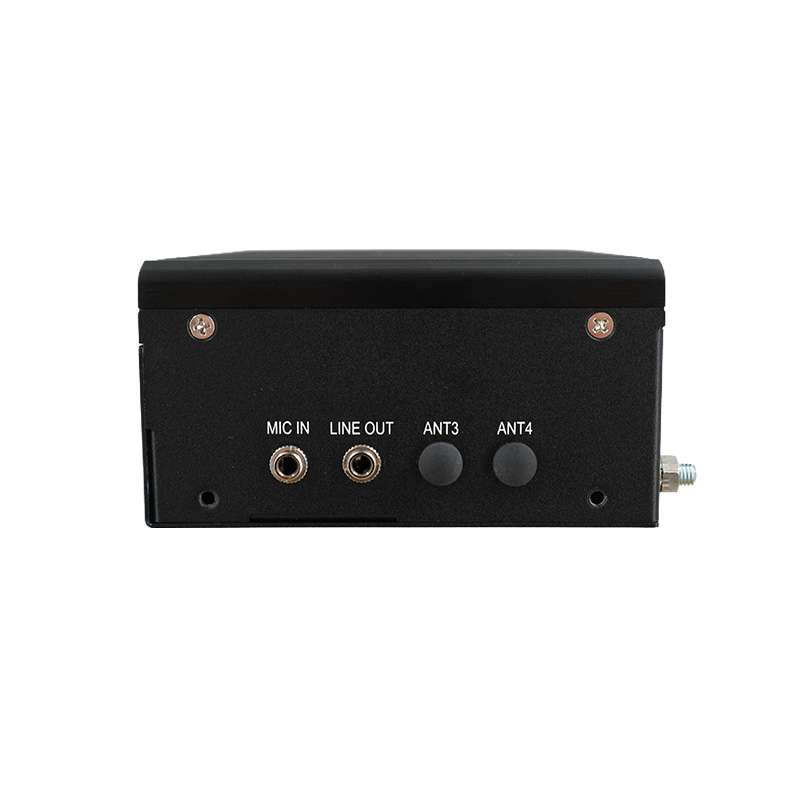
SBOX-2625 & SBOX-2625-2S: Provide 2 x RS-232/422/485 ports.
-
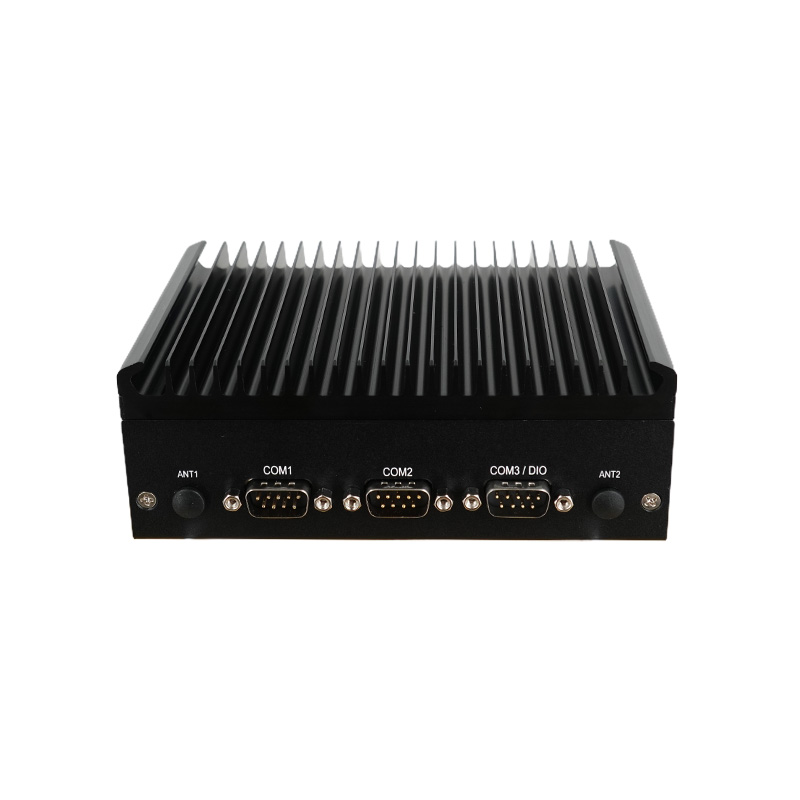
SBOX-2625-3S: Provides 2 x RS-232/422/485 ports plus 1 x dedicated RS-232 port. The RS-232/422/485 protocol switching can be configured via BIOS settings or internal onboard hardware jumpers.
Q2: What types of hardware-level power protection does the SBOX-2625 embed for volatile industrial deployments?
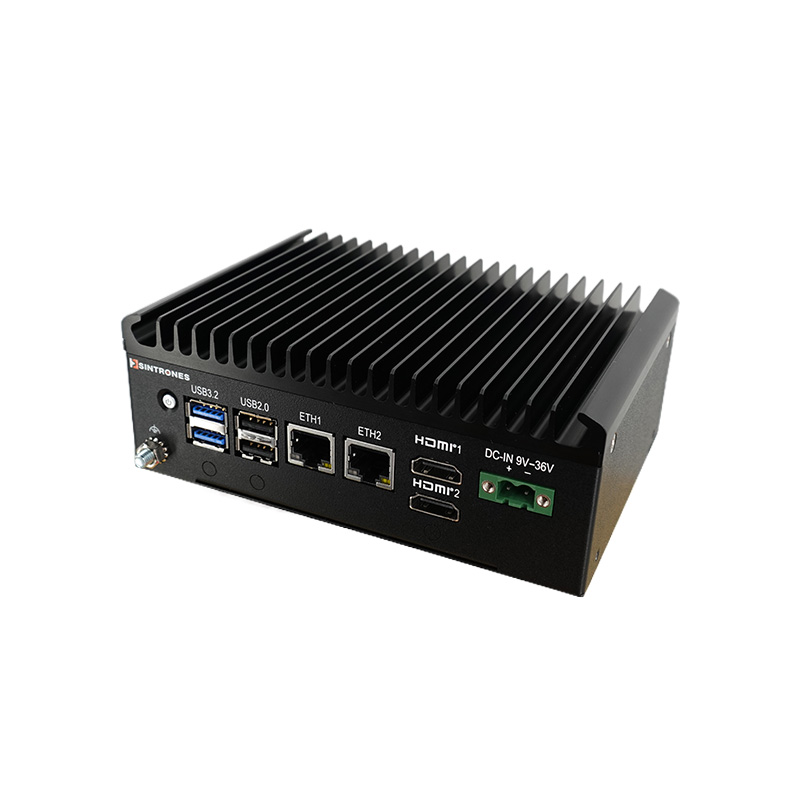
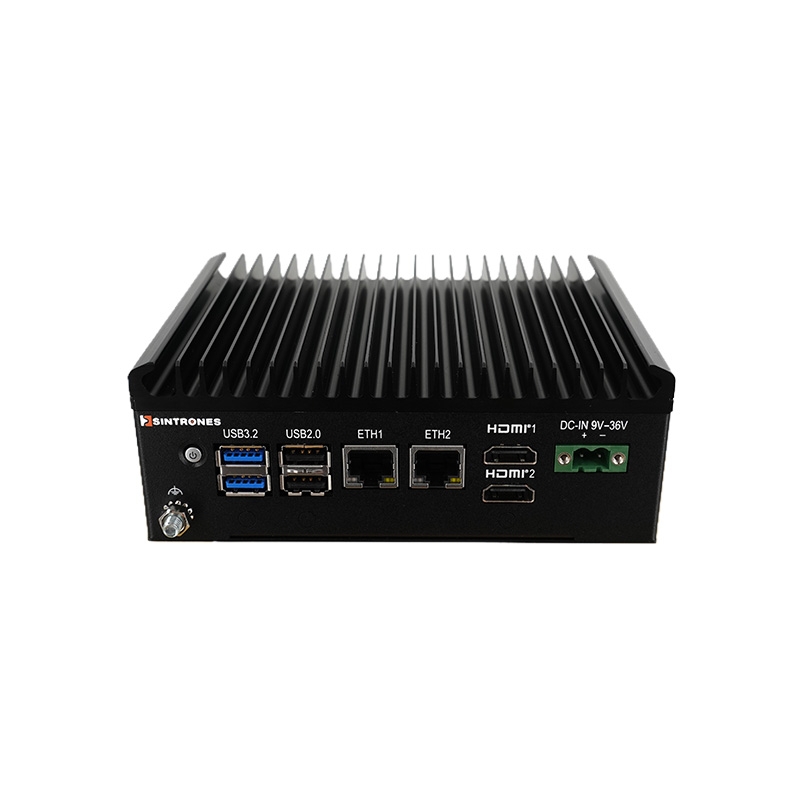
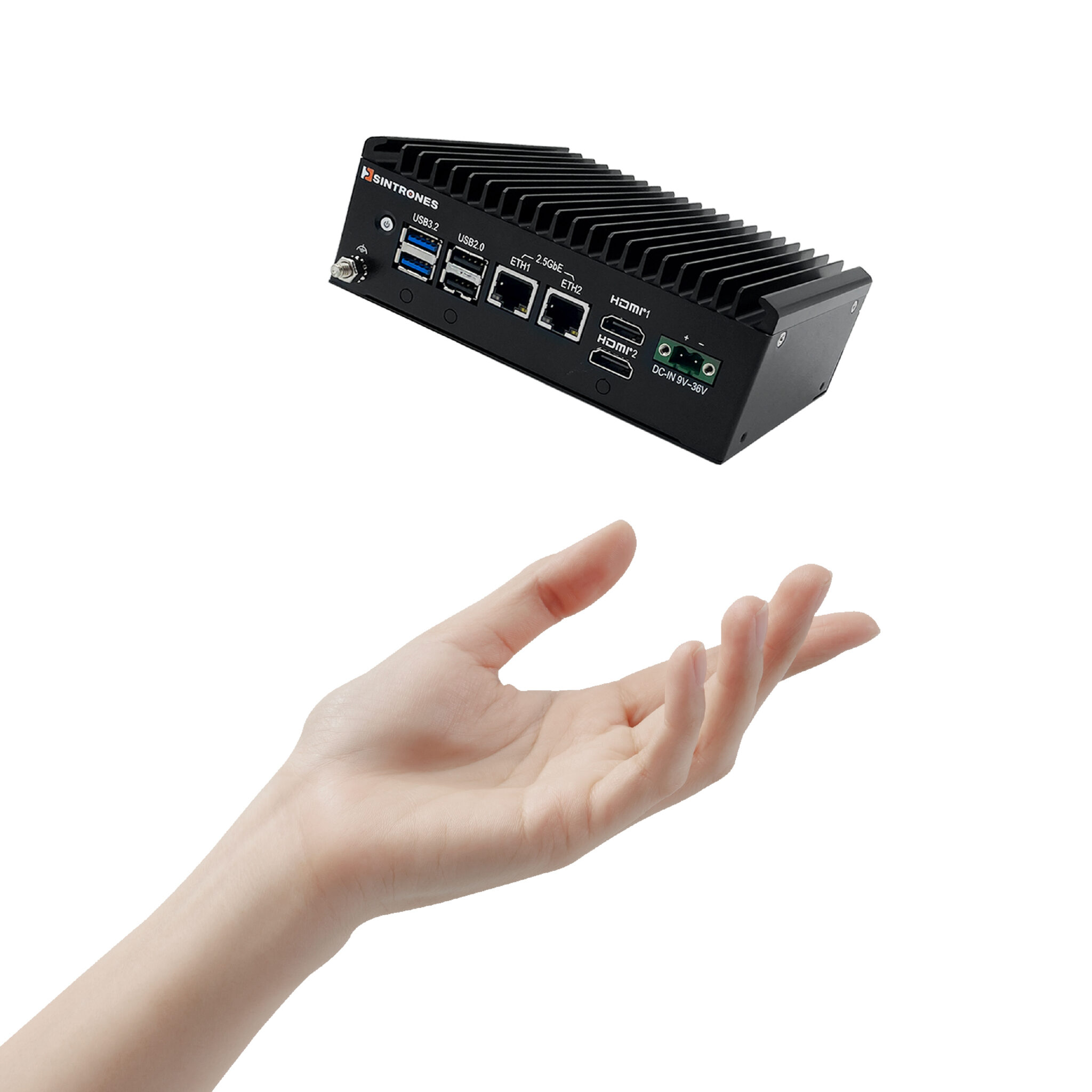
A2: The system supports a 9–36V wide DC power input (nominal 12V/24V) via a 2-pin terminal block. To ensure continuous operations on harsh factory floors, the input terminal is backed by integrated industrial protection circuitry, including Over-Current Protection (OCP), Over-Voltage Protection (OVP), Surge Protection, and Reversed Polarity Protection.
Q3: Which specific network chipsets are utilized for the dual 2.5GbE ports, and what advanced LAN functions do they support?
A3: The SBOX-2625 is equipped with two independent Intel® I226-LM PCIe 2.5 Gbps Ethernet controllers accessed via RJ-45 interfaces. These high-bandwidth chipsets inherently support standard corporate network deployment features, including Wake-on-LAN (WoL), PXE Network Booting, and Jumbo Frames to maximize data throughput for network-heavy machine vision edge deployments.
Q4: Which Operating Systems are officially validated and supported by the SBOX-2625 platform?
A4: The SBOX-2625 platform has undergone full software compatibility validation and formally supports Microsoft Windows 11 IoT Enterprise LTSC as well as Linux Ubuntu 24.04 LTS.
Q5: How is the Watchdog Timer implemented on this device for automated system recovery?
A5: The system architecture features an integrated Watchdog Timer designed to auto-reset unresponsive systems. It can be programmed and initialized directly via the BIOS, offering custom software-configurable timeout delay settings ranging from 1 to 255 seconds or minutes.
Q6: What are the exact physical interfaces, protocol routing, and co-installation limitations of the internal M.2 slots?
A6: The device integrates two dedicated expansion slots, alongside a specialized shared configuration:
-
M.2 2230 Key E: Dedicated to Wi-Fi and Bluetooth wireless module expansion.
-
M.2 3042/3052 Key B: Supports PCIe and USB interfaces for WWAN modules and includes a single onboard Nano SIM card slot.
-
Storage Co-existence: The M.2 Key B slot functions as a combo layout; it can be used to install either a WWAN module or an alternative M.2 2242 Key B SATA SSD, but not both simultaneously.
Q7: How does the SBOX-2625 ensure hardware-level platform security and data cryptography?
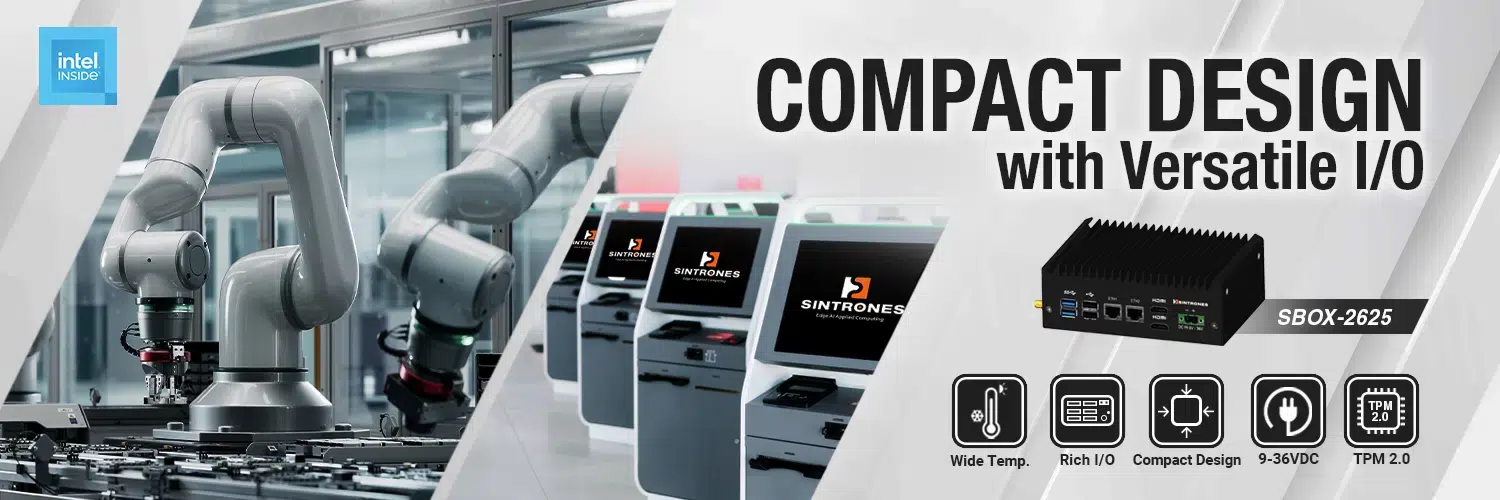
A7: The motherboard features a dedicated onboard TPM 2.0 (Trusted Platform Module) hardware security chip. This chip securely generates and stores cryptographic keys, enhancing overall system security and protecting critical enterprise data against unauthorized software modifications.
Q8: What is the maximum resolution and refresh rate supported by the dual HDMI outputs?
A8: The system provides 2 x HDMI® display interfaces driven by the integrated Intel® Graphics engine. Operating completely independently to support extended or cloned multi-display environments, both ports conform to the HDMI 2.0b specification, delivering high-definition video outputs up to 3840 x 2160 pixels at a fluid 60Hz.
Q9: What type of volatile memory technology does the SBOX-2625 deploy, and what is its maximum limitation?
A9: The platform incorporates one 262-pin SO-DIMM slot optimized for next-generation, high-speed DDR5-4800 non-ECC memory. The system architecture supports memory capacity scaling from 8GB up to a maximum limitation of 16GB.
Q10: What are the physical differences and Digital I/O (DIO) availability among the SBOX-2625 product models?
A10: While all variants share an identical ultra-compact aluminum alloy chassis (150 x 106 x 55 mm) and support identical CPU options (Intel® Twin Lake N150, Intel Atom® x7433RE, or project-based Core™ 3 N355), they differ in USB and DIO counts:
-
SBOX-2625-2S: Features 2 x USB 3.2 Gen 1, 2 x USB 2.0, and includes isolated DIO (4 x DI at DC 5-36V, 4 x DO at DC 5V/100mA).
-
SBOX-2625-3S: Features 2 x USB 3.2 Gen 1, 2 x USB 2.0, and 3 x COM ports, but has 0 x DIO.
-
SBOX-2625 (Standard): Features 2 x USB 3.2 Gen 1, 4 x USB 2.0, and 2 x COM ports, but has 0 x DIO.