

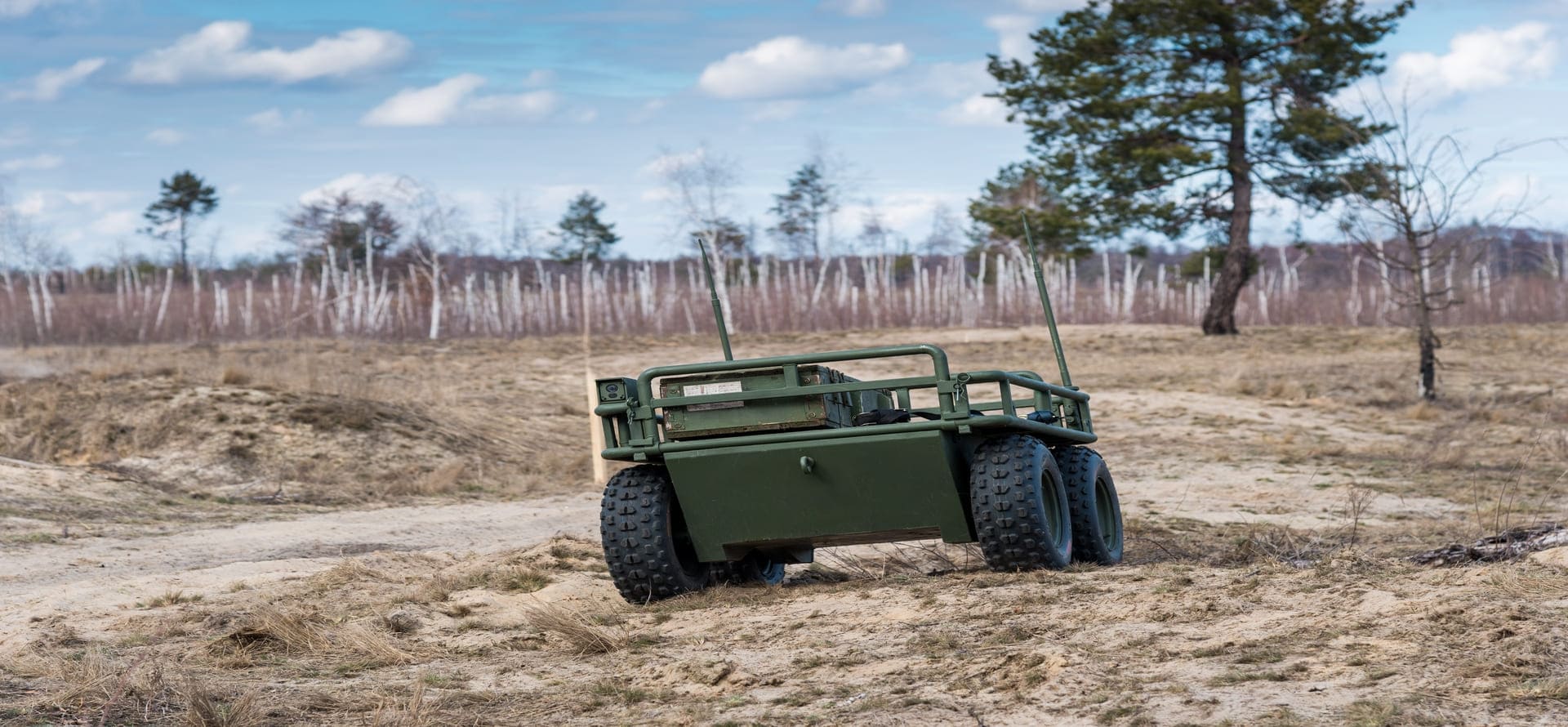
Tactical Autonomy: Edge AI Computer for Unmanned Ground Vehicle
Server-Grade Performance with Intelligent Thermal Management for Tactical AI Systems
Project Overview
Client Profile
A defense engineering contractor specializing in tactical unmanned defense robotics.
Application
Live situational awareness, real-time threat detection, and autonomous navigation for multi-mission military land vehicles.
Solution Implemented
SINTRONES ABOX-5220(P)(G) High-Performance rugged edge AI computer.
Introduction
In high-risk combat zones, modern defense sectors increasingly rely on tactical unmanned ground vehicles (UGVs) to perform scouting, logistics, and threat mitigation. To execute these autonomous missions without human intervention, the vehicle’s central system must instantly process massive streams of environmental data through machine learning models. Implementing these advanced capabilities requires an ultra-rugged edge AI computer that delivers heavy localized processing power without compromising mission endurance. This case study highlights how SINTRONES collaborated with a defense leader to empower advanced robotic machinery with zero-latency decision-making under severe field conditions.
The Challenge: Overcoming Roadblocks in Military Robotics Deployment
Deploying heavy artificial intelligence and deep-learning algorithms directly onto a modern military robotics platform introduces exceptional mechanical and environmental challenges. Standard commercial computing hardware immediately fails when exposed to combat stresses, surfacing three critical engineering bottlenecks:
Overheating from Heavy GPU Accelerated Edge Computing
The synchronization of multi-channel LiDAR, depth cameras, and radar requires extensive processing loads. The massive heat generation from continuous, high-wattage GPU accelerated edge computing often triggers thermal throttling, leading to system drops or critical mission failures during active field deployments.
Mechanical Shock Resistance in Rugged PC on the Battlefield
Unmanned defense vehicles must traverse unpredictable, punishing off-road terrains. This constant exposure to severe, multi-axis shocks and heavy vibrations will fracture standard internal boards, necessitating industrial-grade, certified rugged combat computers built for structural survival.
Severe Space and SWaP Constraints in Small Form Factor Computers
The internal compartment of a tactical defense robot is heavily limited. Computing platforms must maintain a low physical footprint without sacrificing computing density or violating the strict space, weight, and power (SWaP) budgets of the vehicle chassis.
The Solution: Optimizing Autonomous Ground Robotics with Edge AI Platform
To overcome these harsh environmental threats and meet strict physical integration guidelines, the client integrated the SINTRONES ABOX-5220(P)(G) as the central computing core to drive autonomous UGV control.
High Density Computing Architecture with Server-Grade GPU Acceleration
Equipped with server-grade 14th gen Intel Core i9 processors and high-speed DDR5-5600 memory up to 96GB, this specialized rugged edge AI computer easily handles real-time target recognition, complex multi-sensor data fusion, and edge analytics with zero latency. It features discrete GPU acceleration options up to NVIDIA RTX Embedded 5000 Ada to maximize processing density.
Advanced Passive Cooling: Fanless Industrial Computer for High-Wattage Combat Hardware
SINTRONES engineered the platform with a patented fanless thermal cooling architecture capable of handling heavy graphics engine loads. Specifically tailored for high-wattage hardware in rugged environments, this specialized design conducts heat away from critical processing chips effectively, keeping these rugged combat computers operating at maximum capacity within their required temperature envelope.
Vibration-Resistant Compact Footprint for Military Robotics Platform
Featuring a lightweight yet ultra-durable aluminum alloy chassis certified to withstand heavy off-road mechanical stress under standard MIL-STD-810H protocols, the ABOX-5220(P)(G) easily slides into the tightly restricted layout of any modern military robotics platform.
The Business Impact: Enhancing Operational Readiness and Fleet Endurance
Deploying the SINTRONES embedded architecture delivered immediate field-readiness upgrades and long-term reliability for the client’s autonomous machinery:
Eradication of Thermal Throttling via GPU Accelerated Edge AI Computing
The optimized thermal cooling layer ensures high-wattage computing components maintain safe core temperatures, allowing intensive GPU accelerated edge computing workloads to run non-stop without throttling performance.
Maximum Reliability: Industrial PCs for Combat-Grade Hardware in Harsh Environments
The specialized anti-vibration design completely eliminated structural hardware failures during off-road operations, maximizing vehicle uptime and safeguarding precise autonomous UGV control across unpredictable battlefields.
Seamless, Drop-In System Integration Requirements for Engineering Teams
The compact layout allowed the client’s engineering team to integrate the processing platform smoothly into the existing tight enclosure, eliminating the need for expensive structural redesigns or chassis modifications.
Conclusion: Future-Proofing Next-Generation Military Robotics Platforms
By delivering uncompromised 14th gen Intel Core i9 processing power and discrete GPU acceleration within an ultra-ruggedized, vibration-resistant package, the SINTRONES ABOX-5220(P)(G) successfully bridges the gap between complex AI processing and punishing battlefield environments. This deployment guarantees sustained tactical endurance and zero-maintenance operational reliability, proving that a dedicated rugged edge AI computer is essential for next-generation defense automation.